CPT coding for ultrasound-guided thyroid biopsies requires precision, utilizing codes like 60100 and 76942. Accurate coding ensures appropriate reimbursement and reflects the procedure’s complexity.
Overview of Thyroid Biopsy and Ultrasound Guidance
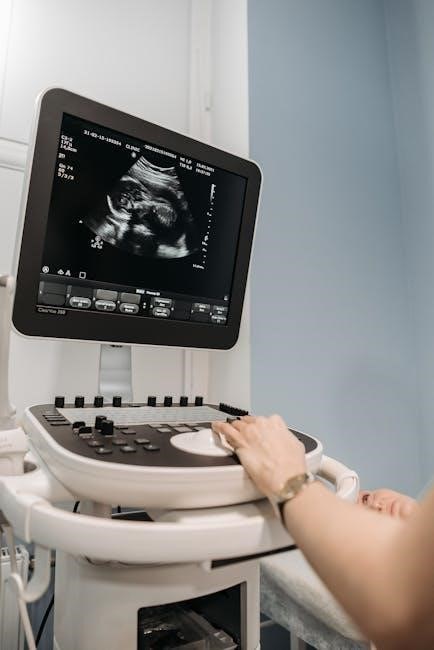
Thyroid biopsies are crucial for diagnosing thyroid nodules and cancers, often employing fine needle aspiration (FNA). Ultrasound guidance significantly enhances accuracy, allowing precise needle placement within suspicious lesions. This technique minimizes risks and improves sample adequacy, leading to more reliable results.
CPT codes reflect this combined approach. While 60100 covers the percutaneous thyroid biopsy itself, 76942 specifically addresses the ultrasound guidance component. The use of ultrasound is not merely an add-on; it’s integral to a safe and effective procedure. Proper documentation detailing the ultrasound’s role is essential for correct billing. Furthermore, patient preparation, including a 6-hour NPO requirement, is standard practice.
Importance of Accurate CPT Coding
Accurate CPT coding for ultrasound-guided thyroid biopsies is paramount for several reasons. Correct coding directly impacts reimbursement from insurance providers, ensuring facilities receive appropriate payment for services rendered. CPT codes 60100 and 76942, when used correctly, clearly define the procedures performed and justify the billed amount.
Furthermore, precise coding supports data collection for healthcare analytics, aiding in research and quality improvement initiatives. The introduction of new codes, like 60660 & 60661 for thyroid ablation, highlights the evolving landscape and the need for up-to-date knowledge. Detailed documentation, including lesion counts and imaging details, is vital for audit defense and avoiding claim denials.
Primary CPT Codes for Ultrasound-Guided Thyroid Biopsy
CPT codes 60100 (thyroid biopsy, percutaneous) and 76942 (ultrasound guidance) are fundamental for billing thyroid biopsies accurately and comprehensively.
CPT Code 60100: Percutaneous Thyroid Biopsy
CPT code 60100 specifically describes a percutaneous thyroid biopsy, meaning the procedure involves accessing the thyroid gland through the skin using a needle. This code represents the core biopsy procedure itself, distinct from the imaging guidance utilized. It’s crucial to remember that 60100 doesn’t include ultrasound guidance; that’s billed separately.
When reporting 60100, documentation should clearly indicate the percutaneous approach and the specific technique employed. This code is applicable when a needle is inserted through the skin to obtain a tissue sample for pathological examination. Proper documentation supports medical necessity and accurate reimbursement. It’s important to note that if multiple lesions are biopsied during the same session, additional codes may apply, as detailed in subsequent sections.
CPT Code 76942: Ultrasound Guidance for Biopsy
CPT code 76942 represents the ultrasound guidance utilized during a thyroid biopsy. This code is always reported in conjunction with the biopsy code (like 60100) when ultrasound is used for real-time visualization and needle placement. It acknowledges the radiologist’s skill in navigating the needle to the target lesion, enhancing accuracy and safety.
Crucially, 76942 isn’t a standalone procedure; it’s an add-on code. Documentation must clearly demonstrate the use of ultrasound guidance throughout the biopsy process. This includes descriptions of the ultrasound findings and how they directed the needle. Accurate coding requires reporting both the biopsy code and the guidance code to fully represent the services provided, ensuring appropriate reimbursement for both components of the procedure.
Additional CPT Codes & Considerations
CPT codes 10005-10012 detail guidance for FNA using ultrasound, fluoroscopy, CT, or MRI, offering specificity beyond basic ultrasound guidance.
CPT Codes 10005 & 10006: Ultrasound-Guided Fine Needle Aspiration (FNA)
CPT codes 10005 and 10006 specifically address ultrasound-guided Fine Needle Aspiration (FNA) of the thyroid. Code 10005 represents the initial FNA, while code 10006 is utilized for each additional lesion biopsied during the same session.
These codes are crucial when multiple thyroid nodules require evaluation, ensuring accurate billing for the comprehensive procedure. Proper documentation detailing each lesion biopsied is essential for correct code assignment and avoiding claim denials. The AAPC Knowledge Center highlights these as newer codes impacting FNA coding practices. Remember, these codes are distinct from the primary biopsy code (60100) and the ultrasound guidance code (76942).
CPT Codes 10007 & 10008: Fluoroscopic-Guided FNA
CPT codes 10007 and 10008 are designated for Fluoroscopic-Guided Fine Needle Aspiration (FNA) of the thyroid. Code 10007 represents the initial FNA procedure performed under fluoroscopic guidance, while code 10008 is used to report each additional lesion biopsied during the same session.
Fluoroscopic guidance is less common than ultrasound for thyroid FNA, but these codes are vital when utilized. Accurate documentation specifying the use of fluoroscopy and detailing each targeted lesion is paramount for appropriate billing. These codes, like others for image-guided FNA, ensure proper reimbursement for the increased complexity and precision involved. Remember to differentiate these from ultrasound-guided codes (10005 & 10006) and other guidance modalities.
CPT Codes 10009 & 10010: CT-Guided FNA
CPT codes 10009 and 10010 specifically address CT-Guided Fine Needle Aspiration (FNA) of the thyroid. Code 10009 is assigned for the initial FNA procedure performed utilizing Computed Tomography guidance, providing real-time visualization. Code 10010 is then utilized for reporting each additional lesion biopsied during the same CT-guided session.
CT guidance is typically reserved for cases where ultrasound is inconclusive or inaccessible. Precise documentation detailing the CT guidance, the number of lesions targeted, and the specific anatomical locations is crucial for accurate coding and reimbursement. These codes distinguish themselves from ultrasound and fluoroscopic guidance, reflecting the unique technical aspects and increased complexity of CT-guided FNA procedures.
CPT Codes 10011 & 10012: MR-Guided FNA
CPT codes 10011 and 10012 are designated for Magnetic Resonance (MR)-Guided Fine Needle Aspiration (FNA) of the thyroid. Code 10011 represents the initial FNA procedure performed under MR guidance, offering detailed soft tissue visualization. Subsequently, code 10012 is used to report each additional lesion biopsied during the same MR-guided session.
MR guidance is typically employed when CT scanning is contraindicated or when superior soft tissue characterization is required. Thorough documentation is essential, including details of the MR guidance technique, the number of lesions targeted, and precise anatomical locations. These codes are distinct from those used for ultrasound, fluoroscopy, or CT guidance, reflecting the specialized nature and complexity of MR-guided FNA procedures.
Coding for Multiple Lesions
Multiple thyroid lesions require separate coding for each biopsied site, utilizing add-on codes like 10006 or 10012, alongside the primary biopsy code.
Coding for Each Additional Lesion Biopsied
When performing a thyroid biopsy and encountering multiple lesions requiring separate evaluation, accurate coding necessitates reporting an additional code for each lesion beyond the initial one. CPT code 10006 specifically addresses ultrasound-guided fine needle aspiration (FNA) for each additional lesion. This is a critical distinction, as simply reporting the primary biopsy code (like 60100) doesn’t fully capture the work performed.
The documentation must clearly delineate each lesion biopsied, including its location and any unique characteristics. Failure to accurately report these additional lesion codes can lead to claim denials or underpayment. Remember, the codes are additive; one primary code plus one add-on code per additional lesion. This ensures appropriate reimbursement for the increased complexity and time involved in evaluating multiple thyroid nodules.
Distinction Between Single and Multiple Lesion Coding
The coding approach for thyroid biopsies dramatically shifts when moving from a single lesion to multiple lesions. A single nodule requires only the primary biopsy code, typically 60100, potentially with 76942 for ultrasound guidance. However, when multiple lesions are addressed during the same session, the coding becomes more nuanced.
Each additional lesion necessitates the use of add-on codes like 10006 (for ultrasound-guided FNA). This isn’t simply a multiplier of the primary code; it’s a distinct reporting mechanism. Accurate documentation is paramount, clearly identifying each targeted lesion. Incorrectly coding multiple lesions as a single procedure results in significant underpayment and potential audit concerns. Understanding this distinction is crucial for maximizing appropriate reimbursement.
Insurance Coverage and Reimbursement
CPT codes 60660 & 60661, for thyroid ablation, are new and expected to positively impact coverage for related biopsy procedures and reimbursement rates.
New CPT Codes (60660 & 60661) for Thyroid Ablation & Impact on Biopsy Coverage
The introduction of new CPT codes 60660 and 60661 specifically addresses thyroid ablation procedures, marking a significant shift in coding practices. This is a critical distinction when compared to traditional procedures like thyroid biopsies, which historically utilized separate codes for each lesion evaluated.
With these dedicated ablation codes now available, healthcare providers anticipate improvements in insurance coverage and subsequent reimbursement for these specific treatments. This change streamlines the billing process and provides clearer documentation for payers. The availability of these codes also allows for a more accurate reflection of the work performed during ablation procedures, potentially leading to fairer compensation.
Ultimately, the implementation of CPT 60660 & 60661 aims to enhance the financial viability of thyroid ablation, benefiting both providers and patients.
Expected Improvements in Insurance Reimbursement
The introduction of dedicated CPT codes, particularly 60660 and 60661 for thyroid ablation, is projected to positively influence insurance reimbursement rates. Historically, ambiguity in coding for these procedures led to claim denials or underpayment. Clearer code definitions streamline the billing process, reducing administrative burdens for providers.
With more precise coding, insurers can better assess the medical necessity and appropriate valuation of thyroid ablation. This transparency fosters improved claim acceptance rates and more accurate reimbursements. Furthermore, the distinct coding for ablation procedures helps differentiate them from biopsies, ensuring appropriate payment levels for each service.
These changes are expected to enhance the financial sustainability of thyroid ablation, allowing for continued access to this valuable treatment option for patients.
Patient Preparation and Documentation
Patients require a 6-hour NPO fast, excluding medications with minimal fluids, before the ultrasound-guided thyroid biopsy. Detailed documentation is crucial for accurate CPT coding.
NPO Requirements (6-hour Fasting)
Prior to undergoing an ultrasound-guided thyroid biopsy, meticulous patient preparation is essential, with strict adherence to NPO (nothing by mouth) guidelines. Patients are generally instructed to maintain a 6-hour fasting period. This includes abstaining from all solid foods and liquids during this timeframe.
However, certain allowances are typically made for essential medications. Patients may continue taking prescribed medications with only small sips of water to facilitate swallowing. Complete fluid restriction isn’t usually necessary for vital medications.
Importantly, patients should also refrain from smoking and chewing gum during the fasting period. These activities can stimulate gastric secretions, potentially compromising the clarity of the ultrasound examination and the accuracy of the biopsy. Clear communication of these requirements is vital for a successful and safe procedure, and proper CPT coding.
Importance of Detailed Documentation for Coding Accuracy
Precise and comprehensive documentation is paramount for accurate CPT coding of ultrasound-guided thyroid biopsies. Medical records must clearly delineate the procedure performed, including whether it was a percutaneous biopsy (60100) or involved ultrasound guidance (76942).
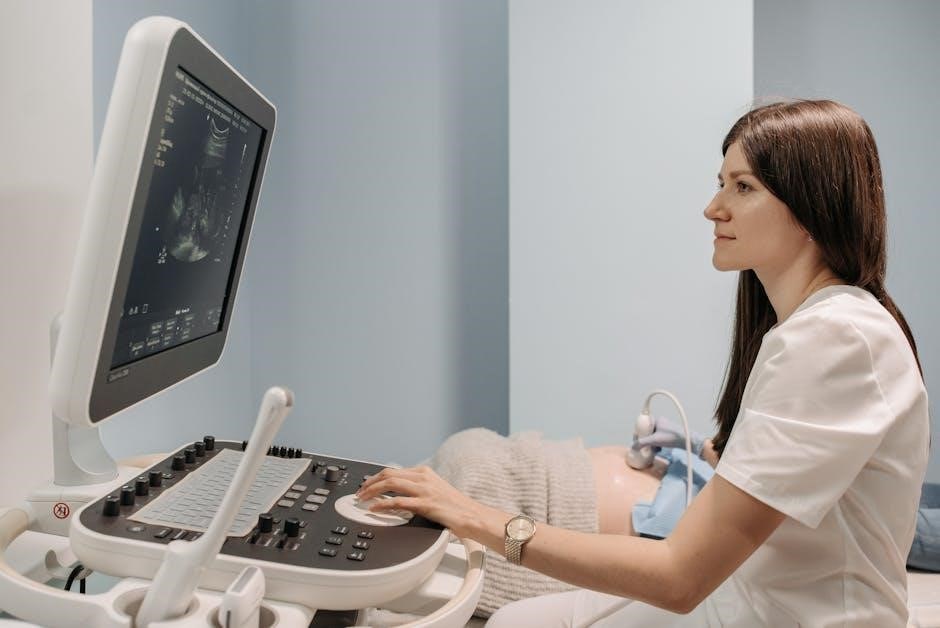
Detailed notes should specify the number of lesions biopsied, as coding differs for single versus multiple lesions. If contrast-enhanced ultrasound was utilized, its medical necessity must be explicitly stated.
Furthermore, documentation should reflect any additional procedures performed, such as fine needle aspiration (FNA) with codes like 10005/10006. Thorough records minimize claim denials, ensure appropriate reimbursement, and demonstrate medical necessity, supporting accurate CPT code assignment and audit compliance.
Contrast Enhanced Ultrasound Considerations
Contrast-enhanced ultrasound inclusion depends on radiologist discretion and medical necessity; documentation is key. Proper coding reflects this added diagnostic element during the biopsy.
When to Include Contrast Enhanced Ultrasound
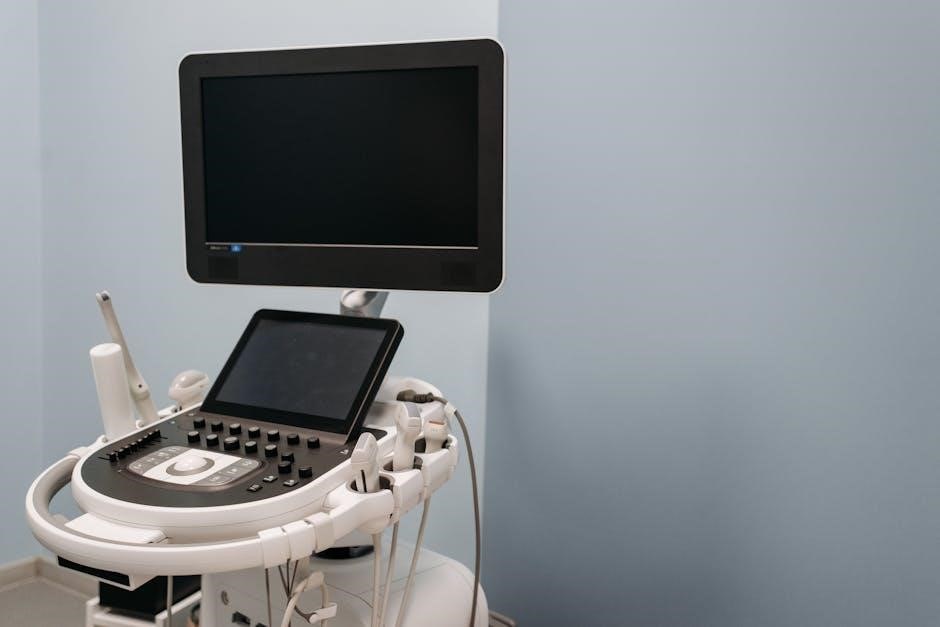
Determining when to incorporate contrast-enhanced ultrasound (CEUS) during an ultrasound-guided thyroid biopsy hinges on clinical judgment and the radiologist’s assessment of medical necessity. CEUS can be particularly valuable when evaluating indeterminate thyroid nodules, enhancing visualization of vascularity within the lesion. This improved visualization aids in characterizing the nodule and guiding the biopsy needle with greater precision.
The Mallinckrodt Institute of Radiology highlights that CEUS is included “at radiologist discretion, if considered medically necessary.” This implies a case-by-case evaluation, considering factors like nodule size, composition, and prior imaging results. Thorough documentation justifying the medical necessity of CEUS is crucial for appropriate coding and reimbursement, ensuring the added value of this technique is recognized.
Medical Necessity for Contrast Enhancement & Coding Implications
Establishing medical necessity for contrast enhancement in thyroid biopsies is paramount for successful claim submissions. Documentation must clearly articulate why CEUS was essential for accurate diagnosis, beyond standard grayscale ultrasound. This includes detailing indeterminate findings, vascular patterns suggesting malignancy, or challenges in nodule characterization.
Currently, there isn’t a separate CPT code specifically for contrast-enhanced ultrasound during a thyroid biopsy. Therefore, the cost of the contrast agent and the additional time/skill involved are typically bundled into the primary biopsy codes (e.g., 60100, 76942). However, robust documentation supporting medical necessity strengthens the claim and minimizes potential denials.
Resources and Updates
AAPC Knowledge Center and Mallinckrodt Institute of Radiology offer valuable, current information regarding CPT coding for thyroid biopsies and related updates.
AAPC Knowledge Center Resources
The AAPC Knowledge Center provides comprehensive resources for medical coders, including detailed articles and training materials specifically addressing CPT coding for procedures like ultrasound-guided thyroid biopsies. Their platform offers insights into new CPT codes – such as 10005 and 10006 for ultrasound-guided FNA – and clarifies the nuances of coding for multiple lesions.
Coders can access information on proper documentation requirements, ensuring accurate claim submissions and minimizing denials. The AAPC also keeps professionals updated on changes in payer policies and guidelines related to thyroid biopsy coding, including the impact of newer codes like 60660 and 60661 for thyroid ablation on biopsy coverage. Regularly checking the AAPC Knowledge Center is crucial for maintaining coding compliance and maximizing reimbursement.
Mallinckrodt Institute of Radiology Information
The Mallinckrodt Institute of Radiology at WashU Medicine offers valuable insights into ultrasound-guided thyroid biopsy procedures and associated CPT coding. Their resources emphasize the importance of patient preparation, specifically a 6-hour NPO (nothing by mouth) requirement, excluding medications with small amounts of water.
They highlight the potential inclusion of contrast-enhanced ultrasound studies when deemed medically necessary by the radiologist. Understanding the correct application of codes like 60100, 76942, and related FNA codes (10005, 10006) is crucial for accurate billing. Mallinckrodt’s information underscores the need for detailed documentation to support coding choices and ensure appropriate reimbursement for these procedures.